Sunday, 23 October 2011

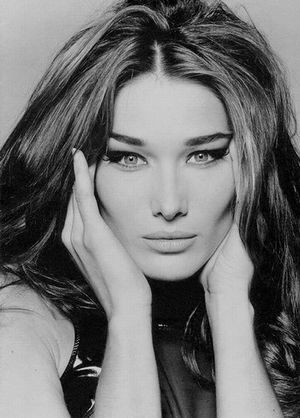
Week 12. Carla Bruni-Sarkozy gives birth to baby girl


For this week's media issue, I'm excited to talk about Carla Bruni's birth to a beautiful baby girl. Carla is not only the most beautiful guitar player, amazing singer, super talented actress, stunning supermodel; she is also France's first lady, wife of French President Nicolas Sarkozy. It is exciting news for the couple as for us, Carla Bruni - Sarkozy's fans, and it is also amazing to see Carla’s post pregnancy body?!


At the moment, the most famous baby of the world has no name yet; I wonder what she will be called? What will she look like, what will she do when she grows up? She comes from such an interesting combination of facts: daughter of a president, of an artist, a supermodel, an actress and also French. Isn’t all this very exciting?

According to the media neither Bruni or Sarcozy are parents for the first time. Bruni-Sarcozi 43, has one son from an earlier relationship and Sarkozy has three boys from two previous marriages. This means that for both is their first baby daughter. I can feel the joy and excitement of the couple and I really look forward to reading more about France's first daughter.


References:
http://www.smh.com.au/lifestyle/celebrity/carla-brunisarkozy-gives-birth-to-baby-girl-report-20111020-1m8qs.html 
http://timenewsfeed.files.wordpress.com/2011/10/bruni_sarkozy.jpg?w=455
http://www.modelsblog.info/content/2010/12/carla-bruni.jpg
http://www.guardian.co.uk/culture/2011/oct/19/carla-bruni-sarkozy-baby

Sunday, 16 October 2011

Week 11 - Brochure

For this week's brochure I simply did a sample brochure of how I would marry the images with the text and also the colours and create something that would persuade the intended public. Just as good wine needs the right ingredients for it to be tasty, I think the same rules apply when trying to deliver a message to a specific audience. I used the first cover image of the two hands, as a symbol of help, togethernes and also because that specific image is equally persuading visually and by meaning. I tried to keep it simple and just basically wrote the name of the organization and also very briefly what it is about. In the second one which would be the one at the back of the brochure when folded, I included a picture of the actual place and the details, because I had in mind the reader looking at the brochure. First they look at the cover, then once they know what organization it is and what it is about they straight away want to check out the details, at the back of the brochure. On the inside, I started with a bit more broad information of what the organization is about, to then share on the rest of the insides of the brochure the activities, experiences and everything else about this organization.

Media Issue week 11. Gaddafi's Death.

Who pulled the trigger?


"Keep him alive, keep him alive! someone shouts. Gunshots then ring out. The camera veers off."

Shocking death of Muammar Gaddafi has captured every media and disturbing images accompany the world's biggest news for the week. Who pulled the trigger some asked. Gaddafi was captured alive and beaten to death - but a bullet in his head killed him, even though NTC (National Transitional Council) said that there was no order to kill him.  Gaddafi was calling the rebels 'rats', but apparently he was the rat; he was found in a drainage pipe full of rubbish and filth. 

Gaddafi has been Libya’s post-colonial dictator. He was born in a peasant family in Libya in 1942. There is a lot of controversy about Gaddafi; his followers compared him to the prophet Mohammed, however the west was skeptical to this and saw him always as a threat to the society by sponsoring terrorism. Gaddafi is infamous for his support to terrorist organizations including the IRA in Ireland, and the Spanish Basque separatist movement ETA. Political protests against Gaddafi in February 2011 made him lose control of the east of the country. By March of the same year the Un declared Libya a no fly zone over and in June 2011 the International Criminal Court issued a warrant for his arrest for crimes against humanity. This extravagant leader is famous for having an all female bodyguard contingent known as the Amazonian Guard.
During Gaddafi’s leadership Libya has had a very bitter history. Amnesty International has documented tortured political prisoners. A lot of abduction and assassination for the ones who disagree with him politically has happened during his leadership. As in other strictly communist countries, the government controls the media and the foreign media is not allowed. Independent political parties and trade unions do not exist and women’s rights are limited. All women that want to travel abroad for example need a formal permission from the government.
Gaddafi’s harm towards Libya crosses the border. Documents show that it has been questioned in the past if AU should keep Libya on board of the African Union from a long time. Au’s birth came with the proposal that Colonel Muamar Gaddafi made to the OAU’s Algiers Summit in 1999, to discuss how to make OAU (the Organization of African Unity) effective. His vision was for a United States of Africa, with a single currency, army and powerful leadership. 


References:

BIO. 2011. Colonel Gadaffi Biography [Online]. United Kingdom. http://www.thebiographychannel.co.uk/biographies/colonelgadaffi.html
BAIMU, E. & STURMAN, K. 2003. Africa Watch; Amendment to the African Union’s Right to Intervene: A shift from human security to regime security? African Security Review <http://www.iss.co.za/pubs/asr/12No2/AfWat.html>

http://news.yahoo.com/libyas-gaddafi-caught-hiding-rat-164753890.html http://www.globalpost.com/sites/default/files/imagecache/gp3_small_article/libya-gaddafi-un.jpg

Sunday, 9 October 2011

poster

For this week’s task we were given a poster visually disturbing, to edit it into something more eye pleasing and inviting (and of course, easier to read). For this particular task I thought the image on the right was an appropriate one as I thought it was very relevant to the text.


http://www.iwebcontentnews.com/wp-content/uploads/2009/04/writing.jpg

Foxconn - Dark side of Steve Jobs


Steve Jobs,


we loved you. We were so sad about your death. BUT, we were also disappointed reading all the other articles about how employees in apple factories were treated and all the suicides? 


"The apparent suicides have raised questions about the conditions for millions of factory workers in China, especially at Apple manufacturer Foxconn, where labour activists say long hours, low pay and high pressure are the norm". 


I hate to have to say it, but non fair trade is NOT on. This cruelty has to stop. These employees made your success affordable Steve, yet you still did non-fair trade and treated them so inhumanly? I am left with no words.

Read more: http://www.smh.com.au/technology/technology-news/11th-suicide-at-apple-factory-20100527-wgjo.html#ixzz1cRjtTPL0


http://www.smh.com.au/technology/technology-news/11th-suicide-at-apple-factory-20100527-wgjo.html


Correct Spelling

Choose the correct spelling in the following sentences

  1. Please let me know if there are any reports left to edit.
  2. Please wait there for your orders.
  3. Their efforts to address the inconsistencies went unnoticed.
  4. She was the harder worker of the two.
  5. The lecturer went of to teach in Dubai.
  6. They should have known better.
  7. The exam was too difficult for the new students.
  8. The students were too nervous to read the questions carefully.
  9. She went to close the door and stood too close to the dog.
  10. Most students know when it’s time to hand up their assignments.
  11. The leopard cannot change its spots.
  12. The dog knew its master’s voice.
  13. The group is not hungry because its had its lunch.
  14. We all need to accept the things we can’t change.
  15. I give all students feedback except the ones who won’t accept it.
  16.  Can we get your advise on how to proceed with the proposal?
  17.  The manager will be able to advice us on which strategy is best.
  18.  The CEO and the general manager complement each other in their  
  approach to staff management.
  1.  The guests were full of compliments for their host.
  2.  He reported the incident to the head of personnel.
  3.   I agree with you in principle.
  4.  The principal feature of the building is its large staircase.
  5.  Do you know where we are supposed to leave our assignments.
  6.  This semester’s exams were very hard.
Insert the correct word in the sentence.

1. I shall complain to the head of personnel.
2. I’m not adverse to the idea.
3. The politician was not particularly discrete about the matter.
4. He refused to pay his council rates.
5. I like most vegetables, but I loathe spinach and brussel sprouts.
6. They agreed in principle to the suggestion.
7. I will forward your letter to the chairman.
8. This wine would be a wonderful complement to any meal.
9. To mark this historical occasion, the Queen will give a speech.
10. It’s a personal issue, and I will not discuss it in public.
11. The newspaper article included an allusion to the PM’s scandalous past.
12. The foreword should be written by an expert in the field.
13. Our project is divided into discreet parts.
14. The script will be reworked before filming begins.
15.  My music teacher told me to practise my chords.
16. This is the scrips for my thousand shares in Telstra.
17. These documents are of historic interest.
18. She will counsel the student before making any recommendations.
19. It wasn’t real; it was all just an illusion.
20. Poor Bill had an averse reaction to the flu injection.
21. He paid her an unexpected compliment.
22. The school principal spoke to the parents.
23. I’m loath to give him any more money; he will just waste it.
24. The child pulled out the telephone cord.

Saturday, 1 October 2011

Exegesis - Artefact

                                        Exegesis (draft)


Successful communication has always been the result of combined written text and brilliant visual communication. To penetrate the audience and to be able to be absorbed by it, right communication skills are always and at all time crucial. In order to achieve a great visual exposure to the public, it is significantly important to consider and follow the works of the theorists including Walsh, Putnis & Petelin, Reep and Kress. In this essay, I will be talking about how I engaged their theories with the artifacts on the Emily Post Etiquettes: Teas and Other Afternoon Parties, Etiquette in a Bar and Job interview.

As my artifacts will be multimodal, I will stretch the space of this particular theorist in this essay into a bigger one, to give a better view perspective of my work. In her theory, Walsh (2006) talks about the differences between print-based texts and multimodal texts within the context of changed literacy and practices. She explains in detail the aspects of a novel, a picture book, Internet sites and electronic digital texts. In this article, Walsh expands her theory of the reading in the multimodal environment, the process and the reading, explaining how readers respond to different texts. However, she also acknowledged that further research was needed to examine how reading is constructed by these texts. To invest in a better reading of the multimodal texts, it is very important that the spoken/written language blends in harmony with the visuals and the sounds. Kress (2008, pp. 59-60) claims that communication has always been multi-semiotic and as much as text is important, images not only are as important as text but also how they are fused together. Also, O’Halloran & Smith (p. 2) claim that multimodal deals with interaction and integration of two or more semiotic resources in order to achieve the intent of the communication.

Following the above theorists, I had in mind interaction, integration and fusion when I decided on my artifact for my “Teas and Other Afternoon Parties”. Therefore, I chose to make tea party invites with little ‘tea party rules’ in the card to suit it to the audience. To integrate the message and fuse the artifact with the text I decided to not only have the cupcake theme but also bake cupcakes and bring teapot and cups and also play the mad hatter scene from Alice in Wonderland. The invites are simple, very inviting to read with pictures of cupcakes and teapots/cups. The images are proportioned with the actual invite size and also with the text. Chosen colors are ‘soft’ and the text short and very easy to read  – it is a party, no one wants to read a novel on the card. The balance is not monotonous from one invite to another but they also have a weight balance following the four points of ‘weight’ (Reep, 2006, p. 135).

For the Etiquette in a bar I initially thought that the best way to communicate the etiquettes of the bar would be on the bottom of the receipt and also should appear. I think it would be cute on each receipt to receive a “tip” on how to “behave properly”. But then I came to the conclusion that maybe that idea wasn’t that good: by the time you have bought the drink you might’ve already “misbehaved”. This leaded me to the idea that the bar should have a frame with all bar etiquettes at the entrance, to be read when entering the bar. For this etiquette I followed the theory of Putnis & Petelin (1996, p. 233), ‘writing as a problem-solving process’. In this theory, Putnis & Petelin explain how to use writing strategies to problem solving. They claim that the process of writing in academic and professional contexts writers must constantly ask questions to themselves, such as the following: Where will I get my information? How will I structure or sequence it? How will I begin writing? How will I design it for my readers and how will I achieve the appropriate tone? In asking these questions to myself I found these answers: My information is the etiquettes from Emily Post. I will structure it in the simplest way, easy and pleasant to read. I will begin writing with a title: “How to be a lady and how to be a gentleman”. I will design it very simple. I will achieve an appropriate tone maybe by including a lady/gentleman touch; something delicate, something fine. Something that is un-common these days. So I will use handwriting. Delicate and fine handwriting on premium paper framed with a refined taste.


The only images that will be on the right and left of the frame, will be a silhouette of a man with his hand on the hat and a bow tie and an amazing drawing of a silhouette of a classy woman from Karl Lagerfeld the legend designer of Chanel. In “Five ways to integrate prose and graphic, Schriver talks about the first key relationship of prose and graphic which is the “redundant” one. This key is characterized by identical content visually and verbally. Researches show that people’s comprehension is better if content is served with integrated graphics and text. The images that I have picked to complement the text are very much integrated with the text; they represent high class and elegance, as the etiquettes are “manners rules”.  It appears that if information is taken in in more than one-way, it is better understood and also easier to remember. This way the reader has a stronger connection with the content and the memory. In my week 13-artifact presentation the artifact will be accompanied with the soundtrack of the American series ‘Mad Men’, which was set in the 1960’s and is very well known as a high-class show. The soundtrack is by David Carbonara and is called ‘Lipstick’. I chose this particular soundtrack because it just blends perfectly with the etiquettes – it is so redundant.


References:


1.    Walsh, M., 2006, ‘The ‘textual shift’: examining the reading process with print, visual and multimodal texts.’ [online] Australian Journal of Language and Literacy, v.29 n.1 p.24-37

2.    Kress, G 1997, ‘Visual and verbal modes of representation in electronically mediated communication: the potentials of new form of text’ in Page to screen: taking literacy into the electronic era, Snyder, ed Ilana, Allen and Unwin, St Leopards, pp. 59-60


3.    O’Halloran K & Smith BA, Multimodal text analysis, viewed online 22 September 2011 <http://multimodal-analysis-lab.org/_docs/encyclopedia/01-Multimodal_Text_Analysis-O'Halloran_and_Smith.pdf>

4.    Reep, D.C., 2006, Technical Writing 6edn, Ch. 6: Document design, p. 135, New York, USA, p. 135


5.    Putnis, P & Petelin, R 1996, ‘Writing to communicate’, Professional communication: principles and applications, Prentice Hall, Sydney, p. 233

6.    Schriver, KA 1997, Dynamics in document design: creating text for readers. The interplay of words and pictures, Ch. 6 p. 412, Wiley Computer Pub, New York [electronic version]